
01
R&D TEAMSMaterial research
Bring formulation ideas into a repeatable trial workflow.
Explore application ↗From your next formulation
to your next filament trial.
A compact split-design system for material developers, research laboratories and universities exploring small-batch filament development.
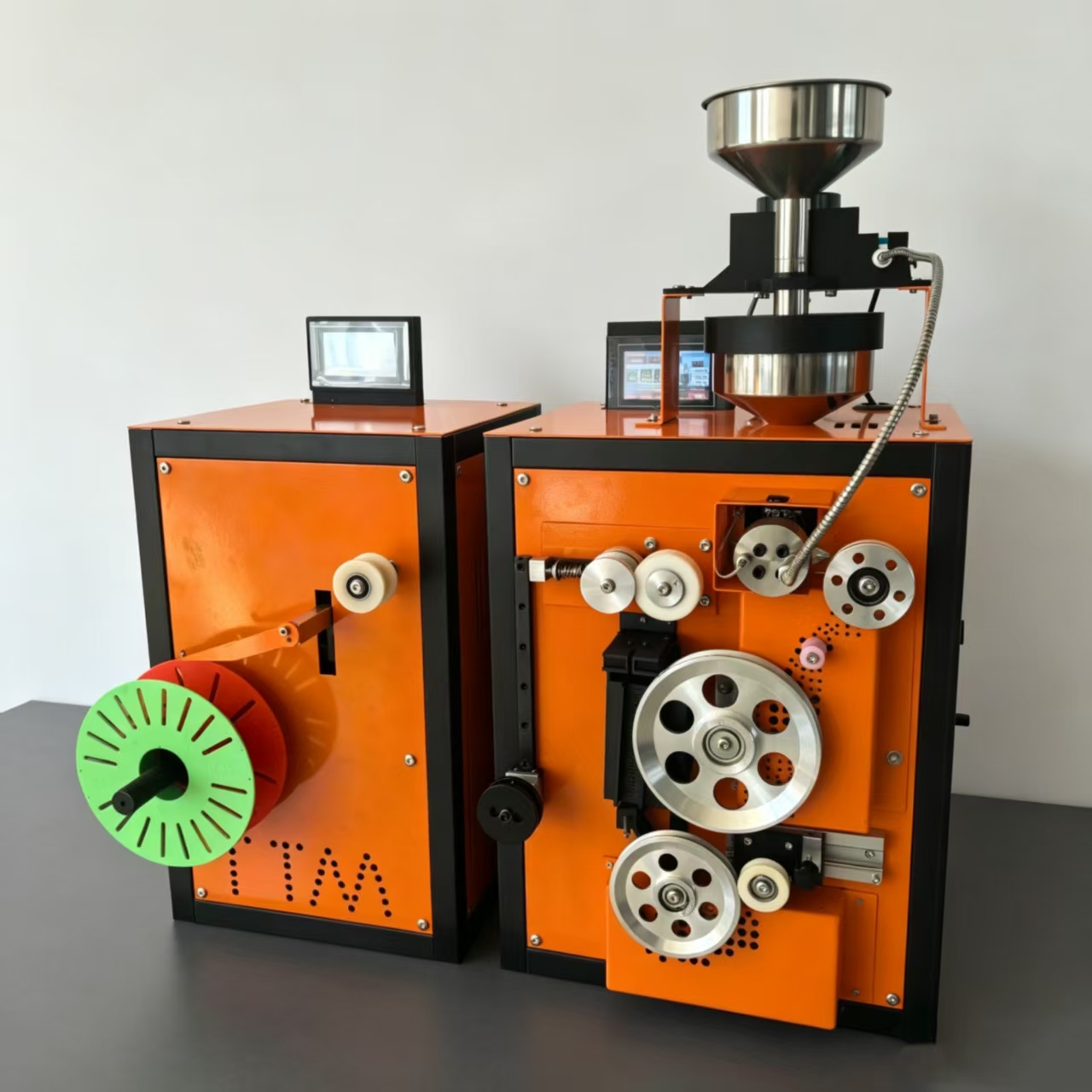
For material developers, universities, R&D labs, filament startups and engineering-material testing teams.
Turn a formulation brief into small-batch filament trials.
Connect research and teaching objectives with a documented experimental workflow.
Review material, processing and measurement needs within a laboratory setup.
Explore an initial filament concept before planning a larger production process.
Prepare trial samples for your own printing and material evaluation.
A closer look at the current split system.
Watch the extrusion and strand-handling module, operator display and separate spooler in a short supplier demonstration.
48 seconds · Edited supplier footage
AI narration and matching subtitles · Screen values show this demonstration, not guaranteed performance.
English narration · Subtitles included
Follow the material from feedstock to collected filament.
Pellets, powders or crushed feedstock enter through the feeding stage.
The material is processed into a continuous strand.
The strand passes through the cooling stage.
The system measures filament diameter.
The strand moves through downstream handling.
A buffer stage sits within the filament path.
The system includes a length-counting stage.
Filament is collected for subsequent evaluation.
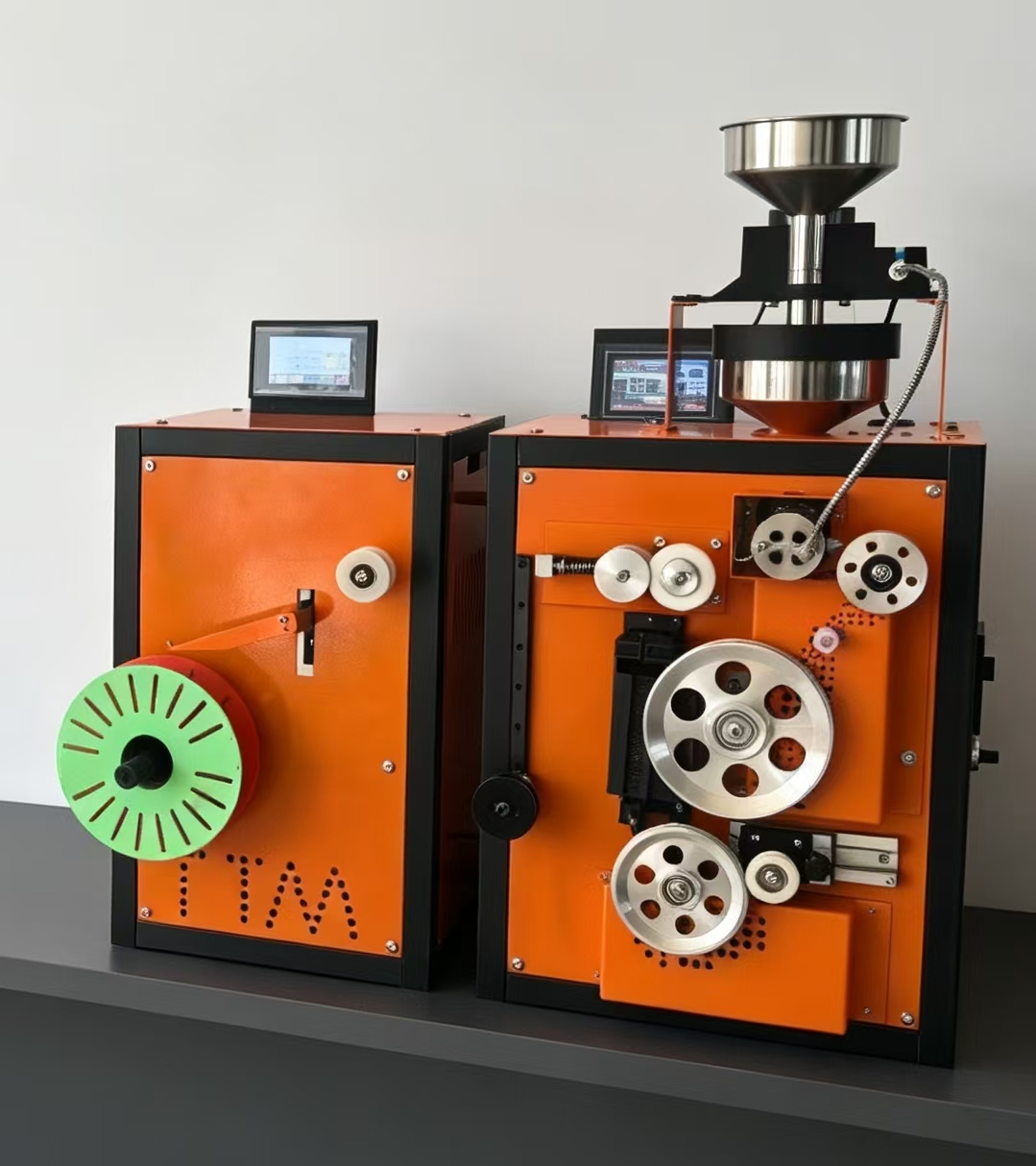
Recognizable components, marked directly on the current split-system photograph.
 1234
1234The material inlet is positioned above the right-hand module.
The right-hand module brings the extrusion and downstream filament path together.
Operator screens are visible on the separate modules. Specific control logic is discussed with your application.
The left-hand module collects the filament on a spool.
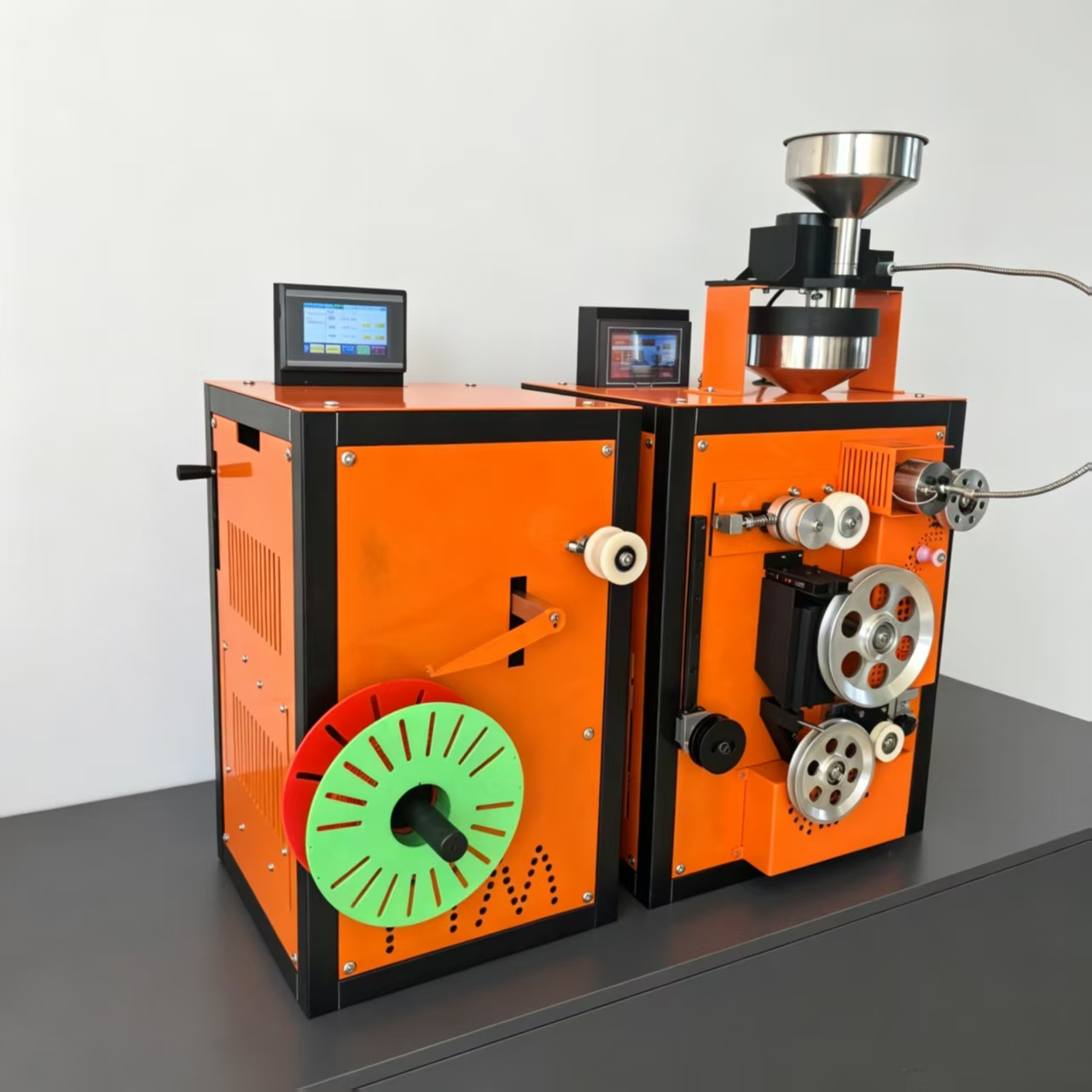
Discuss the available bench area, handling needs, power supply and access around the filament path when planning your installation.
Discuss Your Material ↗Designed to move with your lab. Separate modules make handling, laboratory arrangement and maintenance access more practical.
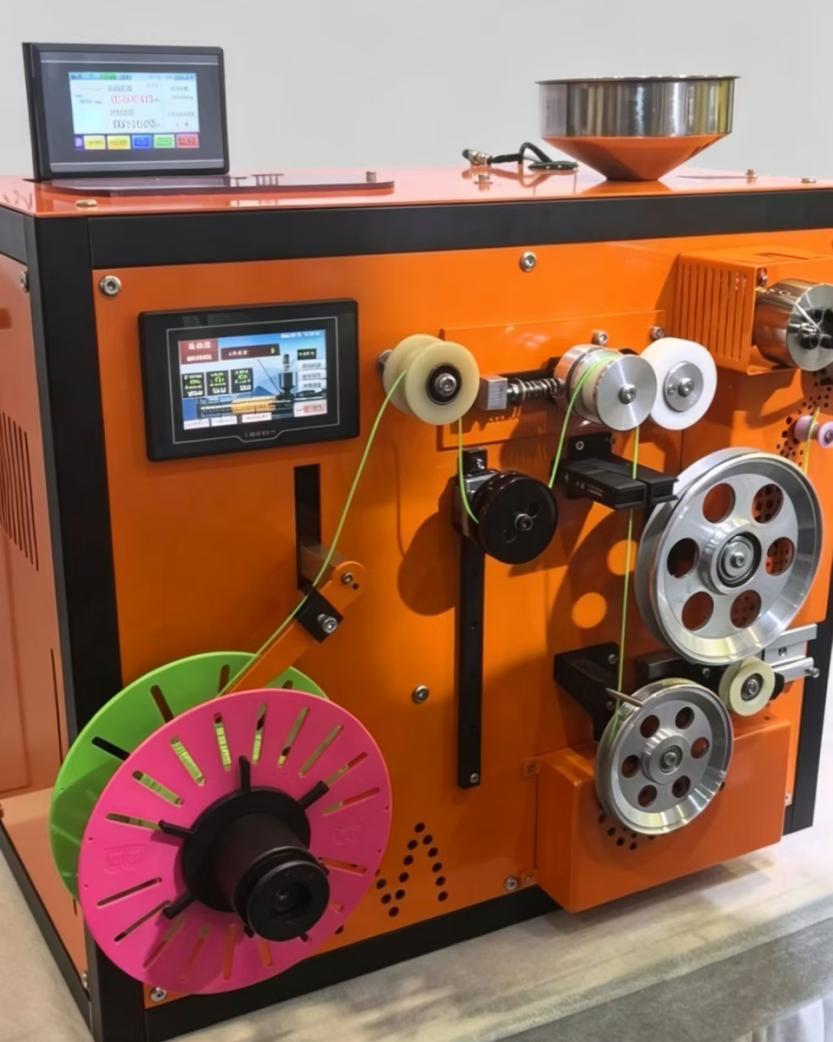
The split design is the current system. The previous integrated model is shown only for design context.
Supplier-listed material families include:
Actual processing depends on formulation, viscosity, moisture content, temperature and pulling conditions. A listed polymer family does not guarantee performance for every grade. Share your material and trial requirements for an application review.
Bring formulation ideas into a repeatable trial workflow.
Explore application ↗Make room for hands-on material development in the lab.
Explore application ↗Explore filament concepts for your own printing workflow.
Explore application ↗Discuss filled formulations before choosing a configuration.
Explore application ↗Evaluate known feedstock in a small-batch research workflow.
Explore application ↗The following specifications apply to the current split-design FilamentLab 2K.
Output and suitable processing conditions depend on the material, formulation and trial settings. Maximum temperature is an equipment limit, not a processing recommendation for every material.
Discuss your configuration| Output | Approx. 1–2 kg/h |
|---|---|
| Minimum trial batch | Approx. 20 g |
| Hopper capacity | Approx. 2 kg |
| Maximum temperature | 450°C |
| Continuous operation capability | Up to 24 h |
| Power supply | 220V / optional 110V |
| Main motor | 400 W servo motor with planetary gearing |
| Heating power | 800 W |
| Diameter measurement | Laser measurement |
| Dimensions | 700 × 500 × 600 mm |
| Weight | Approx. 78 kg |
| Feedstock | Pellets, powders and crushed/recycled feedstock |
| Feeding | Anti-bridging feeding mechanism |
| Warranty | 1 year |
| Support | Remote technical guidance and training |
| Packing | Wooden crate |
Review the warranty terms supplied with your equipment quotation.
Technical guidance and remote training are available for the equipment.
The system is packed in a wooden crate for transport.
The system supports pellets, powders and crushed feedstock. Share the material grade and preparation details so the team can assess your proposed trial.
Yes. Include your required filament diameter in the inquiry so the team can discuss the appropriate configuration.
Quotations are provided following a discussion of your application, configuration and delivery requirements.
Tell us about the material, approximate batch size, output target and available power supply. These details help the team review your requirements.
Bring your material, target output and research goals.
Let’s shape the right workflow.